Tropical Ecology
Belize & Guatemala Field Excursion
Get Ready!
The St. Andrew’s Science Department and Global Studies Department are excited to begin the first of many hopeful adventures to the Mesoamerican region to explore unique biological ecosystems.
Between May 24 and June 5, 2026, students, faculty, and staff will travel to Belize and Guatemala and visit tropical dry forests, tropical cave systems, tropical rain forests, mountain pine forests, mangroves, beaches, and a variety of coral reefs, and see so much more!
Belize and Guatemala are home to some of the most beautiful habitats and species on the planet, and we can’t wait for you to experience the wilderness!
A Quick Summary of our Field Excursion
Cockscomb Basin Wildlife Sanctuary
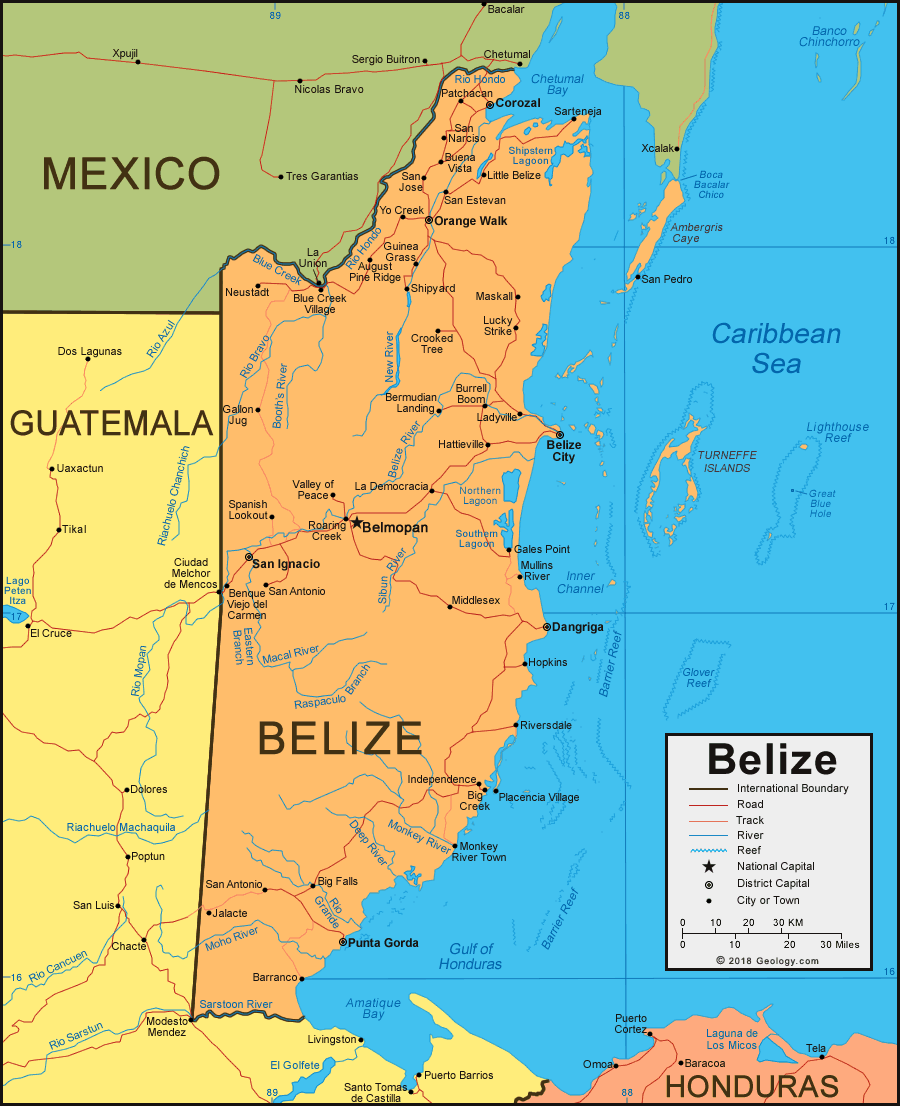
Days 1 - 4: We’ll land in Belize City and grab some lunch at a great local restaurant before heading into the Jungle! During this time, we’ll hike and experience nature like you’ve never done before. Activities include day and hiking, river tubing, games, and climbing to Tiger Fern Falls at the foothills of the Maya Mountains. Cockscomb is just Northeast of the “E” in Belize on the map to the right.
St. Herman’s Cave and Blue Hole National Park
Days 4-6: Get ready to enjoy some chilly, crystal clear water among a forest and cave system in the Central region of Belize. We’ll stop here before heading to Clarissa Falls, a staging ground for several adventures in Western Belize, including cave exploring, pontoon boats, ATM Cave, and more.
Tikal National Park, Guatemala
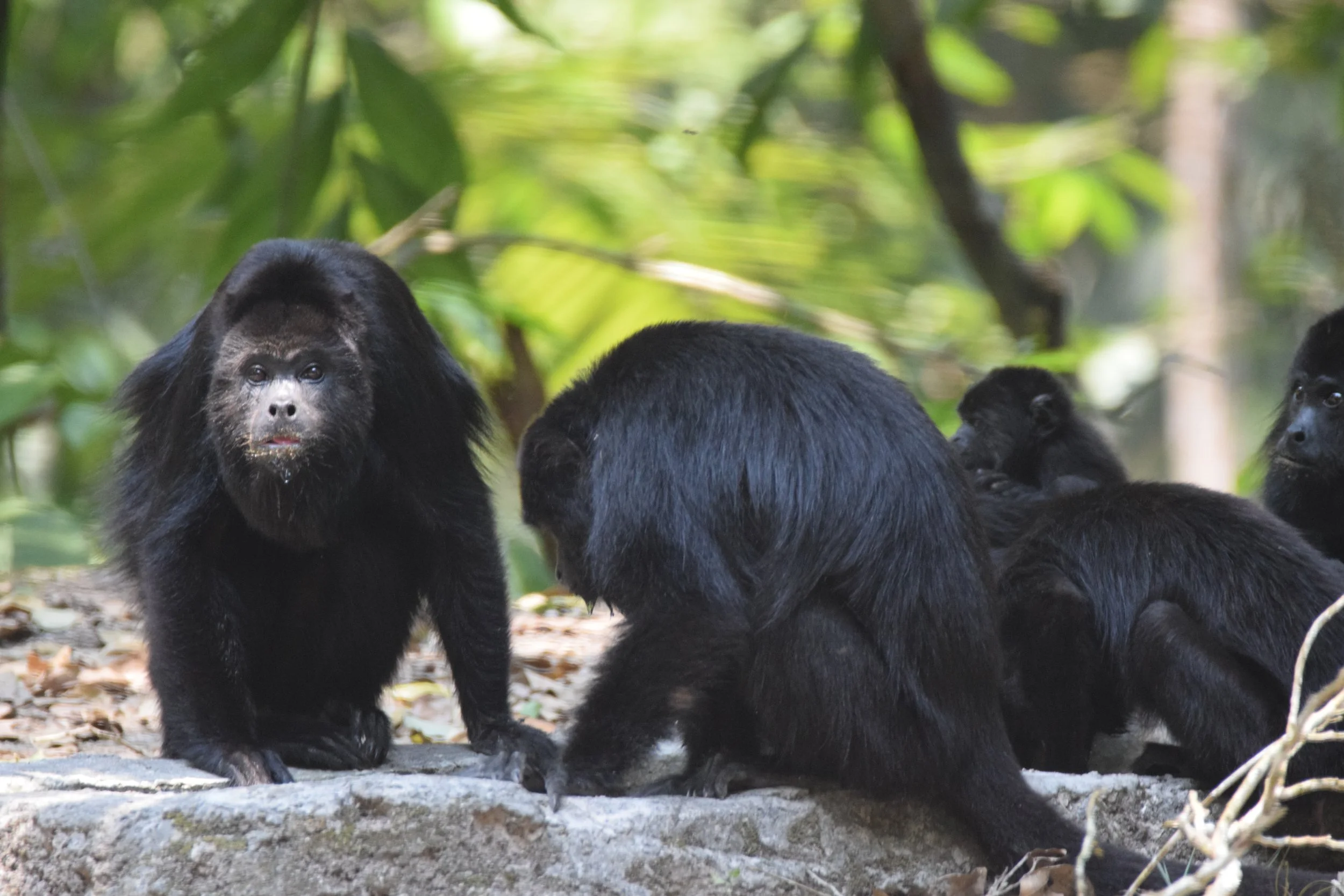
Days 6-8: Explore one of the largest Maya cites in the world, with over 3,000 buildings discovered thus far. You’ll get a chance to explore the plaza, enjoy howler and spider monkeys as they swing in the canopies, and climb to the top of Temple IV to get a bird’s eye view among a rain forest canopy.
Mountain Pine Ridge, Belize Zoo, and Tropical Education Center
Days 8-10: We’ll leave Guatemala and head East back into Belize to camp in the pine forests of the Maya Mountains, enjoy some time at a beautiful waterfall, then visit a series of education centers to see and learn more about native wildlife.
Calabash Caye
Days 10-12: After the jungle, we’ll now head further East into the Caribbean! Get ready for “Island Time” as we find some palm trees to hang our hammocks and explore beaches and marine habitats. We’ll snorkel, bird, hike and relax in ways you never have before.
Manatee Lookout and Crooked Tree Wildlife Sanctuary
Days 12-13: Our final habitat before leaving Belize will be the coastal marsh habitats. We’ll get to find unique bird species not seen thus far on the trip and enjoy one final pool before heading home!
Packing List
Looking for the quick reference packing list? Click the link below to reference key items. We’ve referenced a few to the right that we feel are especially important but please don’t just rely on items highlighted.
Note - We have binoculars that you can borrow on this trip if you’d like! These can be expensive so this is one less item you need to worry about.
A rechargeable fan that can run over 8 hours. Sometimes it’s nice to have a breeze and we’ll sometimes be sleeping in areas that don’t have power at night. I like this one as I can connect it to a carabiner and a rope when I’m sleeping in a hammock. There are also some nice ones with clips like this one.
Refillable water bottle that’s easy to clean. Bottles begin to smell if they don’t have time to dry and some are hard to clean. I’ve carried this same water bottle for 18 years to every wilderness I’ve traveled to.
Flashlights and headlamps! We’ll be out at night a lot it’s great to have plenty of light to spot a kinkajou climbing among the canopy or eye shines of illusive mammals. These can get a bit expensive depending on how many lumens you want. If you’re thinking about getting one that you’d use for decades, I’d recommend the Coast brand. Here’s my headlamp. If you’re just in the market for one to get you through this trip, Coast has cheaper models for less than $20. Look for ones that have good reviews on charge time. It’s never fun to be out in the jungle and have your light go out…
Flashlights can also have wide range of prices. This is my trusty backup flashlight that I’ve had for 14 years, it does great in wet environments, just make sure you bring extra AA batteries. There are also plenty of great rechargeable ones on the market today. Coast also makes great flashlights but be warned that they can also be expensive and heavy.
Reef-safe Sunscreen (Don’t burn! We’re in the Tropics at the end of the dry season) Here’s an example of one that’s safe for you and the reefs.Insect repellent is also great to have around. It’s great for spraying on socks before a hike to reduce chances for ticks and is nice if it does rain. Mosquitoes and no-see-ums aren’t fun if the rains begin.
We’ll have beds or tents depending on the location but there are several times where it’s hard to resist falling asleep under the stars. I enjoy my ENO hammock, and there are several different options. If you do get something like this one, make sure you either get a mosquito net that comes around it or one that’s built in, as well as 2 straps to connect to trees.
Clothes that can get wet and dry quickly. We’re arriving in Belize at the end of the dry season and have no idea when the rainy season begins. We’ve traveled at this time and never seen rain, then seen it for a week straight on other times. Rain won’t stop us from exploring; in fact, it might bring things like Red-eyed Tree frogs, a species that’s only easily found during the first few weeks of the rainy season! Make sure they’re comfortable, can breathe (you’ll be sweating), and don’t hold water. Also avoid leggings. Mosquitoes can bite right through them. Pay attention to the “Clothes” Section of the packing list above.
Preparing for our Trip to the Tropics!
Download the “Merlin Bird ID” App on your phone before you go and the Belize pack. After you’ve downloaded, click Settings and double check that you have two region packs downloaded - the Belize and US: Southeast ones. In total, this would be 588.9 MB.
If you feel like you might bird after this trip, we’d also recommend downloading eBird. It’s much easier at creating species list as we walk on trails and can help you keep track. Our birding extraordinaire, Dr. Brown, can also easily share the lists he creates if you have an account.
Pre-Trip Hiking Day!
We hope to have an adventure as a group together at May’s Lake in Jackson to get folks accustomed to walking together and carrying your bag on a walk. We’ll pay for admission to the park and hope that we can meet as a group sometime in early April. We’d also recommend you get the pair of shoes you’re planning on wearing by this point so that they are worn in before you begin. Never wear untested shoes on a trip with hiking. More to come on this day soon….
Learn More
Our hope in the coming weeks will be to introduce content videos and slideshows with content that could help you learn more about the species and habitats we’ll be visiting. If you’re interested, we hope that you’ll find this content informative. As that content comes live, it will appear in the space below.